


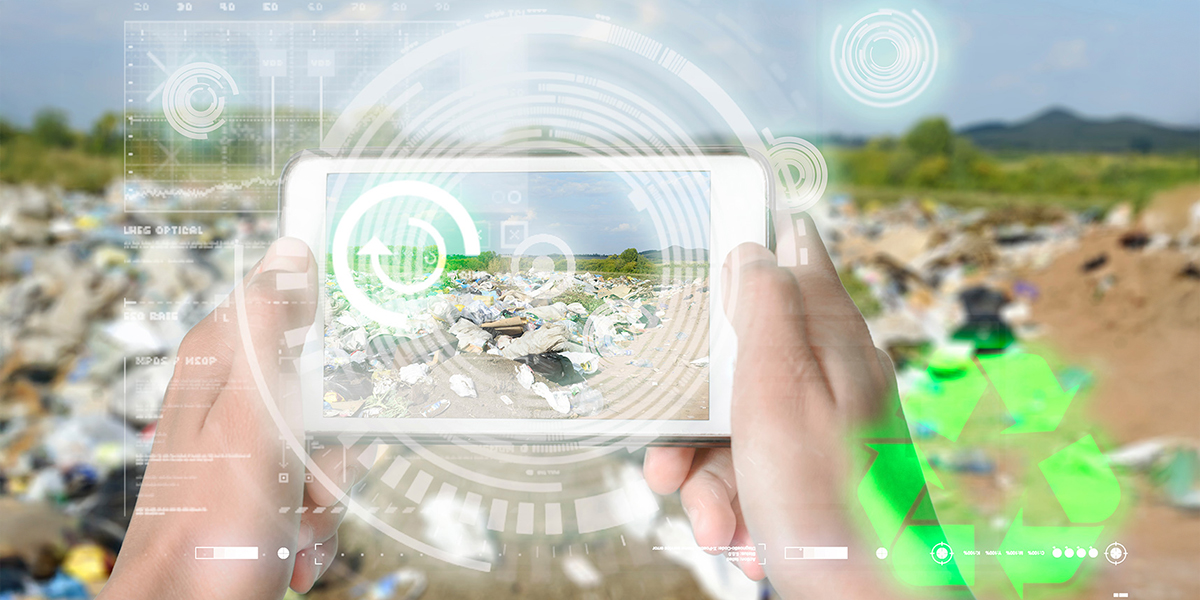
The Circularity Code
How digitalization helps with the plastic transition … and how it doesn’t
The technology is available. However, there is still work to be done on the necessary willingness to cooperate and consistently use it for the resource-saving handling of plastics. This is the central result of the sixth POLYPROBLEM report by the non-profit Röchling Stiftung and the consulting firm WIDER SENSE.
With numerous expert interviews, the study entitled “The Circularity Code” explores the question of how much digital innovations contribute to the fight against plastic waste. It was important to the team of authors to shed light on all relevant sectors and all parts of the value chain: from digital support in design, to the ecological overall assessment of packaging and the digital product passport, to new, digital opportunities in waste management and recycling.
“The complexity of plastic products means that they go through many stages from manufacture to application and finally to recycling. And data is generated in every production step, which is important for sustainable optimization. If there is no willingness to use this data jointly across the entire value chain, the best digital tools will be of little help,” summarizes study co-author Uwe Amrhein.
Digital technologies hold immense potential for the development of a circular economy and the avoidance of plastic waste emissions. With the help of artificial intelligence, machines learn to trim the production process to conserve resources. Digital twins make it possible to play through different scenarios with regard to material and product properties during product development and thus find the best solution.
The digital transformation can also help after the usage phase – for example, in the control of material flows and in the sorting of material to be recycled.
And even in the area of waste prevention, digitalization offers great opportunities. For example, the young companies that are currently launching reusable systems for the out-of-home catering sector rely on apps that make the path of their containers traceable and controllable. And here, too, the question of cooperation arises again. Is a common digital infrastructure needed? Or would it merely restrict competition?
This POLYPROBLEM report also takes a close look at the opportunities for digitally supported removal of plastic waste emissions that have already occurred. In this area, the current development seems to be progressing particularly dynamically. This starts with waste collectors in the Global South, who are increasingly using specially developed apps to record and market their collected materials. And it does not end with globally active organizations for cleaning up bodies of water, which use artificial intelligence to identify “plastic hotspots.”
Despite these opportunities, according to the research of the study authors, it is by no means certain whether digitalization will help environmental protection as a whole or even harm it. After all, productivity increases through digital technologies initially give the classic, growth-driven economic model an additional boost. Whether it will be possible to transform them into a powerful tool on the path to a sustainable economy depends on political framework conditions on the one hand and on the willingness of all those involved to co-create on the other.
Whether the “Circularity Code” works is ultimately not a question of technology, but of attitude.
Click here to download the POLYPROBLEM report.
Under the title POLYPROBLEM, the non-profit Röchling Foundation and Wider Sense are combining various information and networking offers that should contribute to better cooperation in solving this global challenge. These include studies, webinars, workshops and excursions.