For two days, the Circular Future Innovation Program invites stakeholders from across the board to digital dialogues, local hubs, as well as learning labs, marketplaces, and networking opportunities relating to the circular transformation of business and society in German-speaking countries.
Everyone agrees that used plastics must be recycled much more consistently. Nevertheless, the proportion of recyclates in global plastics processing is less than 10 percent. Self-commitments by individual industries do not seem to be the solution.
Almost 400 million tons of plastic are currently produced worldwide every year. However, not even ten percent of it consists of recycled material. There are several reasons for this. One of them is an intransparent and inefficiently organized market for recyclates. The Hamburg-based startup CIRPLUS wants to change that - with a global, digital marketplace for recycled plastic.
In the POLYPROBLEM Online Workshop, CIRPLUS founder Christian Schiller analyzes the problems of the faltering interaction between supply and demand and presents his solution.
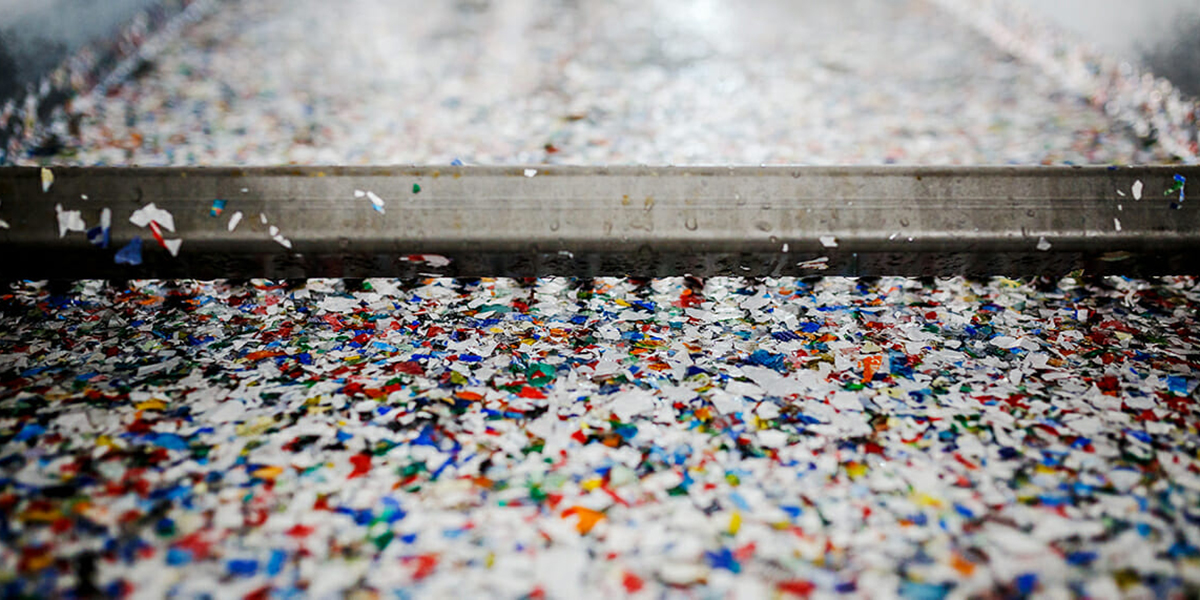
The market for recyclates is broken - this is how the POLYPROBLEM Report summarizes the situation regarding plastic recycling. The report analyzes why the plastic cycle is currently failing and provides approaches to counteract this.
The time for experiments is running out. If it does not succeed quickly in establishing a systematic and resilient waste management system in the Global South, many other efforts to reduce the input of plastic waste into the environment will be in vain. This is shown not only by our latest report "The Waste of Others", but also by the discussion from past online seminars.
Actually, it sounds quite simple: Anyone who puts packaging into circulation is also responsible for what happens to it after it is used. This is what lies behind the term EXTENDED PRODUCER RESPONSIBILITY (EPR). In Germany and large parts of Europe, it has been largely implemented. However, it is precisely at the critical plastic hotspots in the Global South that Extended Producer Responsibility is still largely in its infancy. A major cause of the plastic waste problem.
Too often, experts from the Global North talk about plastic waste in the Global South. We wanted to know firsthand what the local NGOs are concerned about and therefore invited the founder of Environment360 from Ghana to the online seminar. The recording with Cordie Aziz is available online.
There is no blueprint for a functioning, circular waste management system. Solutions from industrialized countries cannot be exported one-to-one to emerging and developing countries. Instead, collaborations at eye level between municipalities, waste collectors and the local recycling industry must be carefully developed under the respective conditions. Dorothea Wiplinger, Sustainability Manager at Borealis AG and initiator of Project STOP, will report on what needs to be considered in the online seminar.
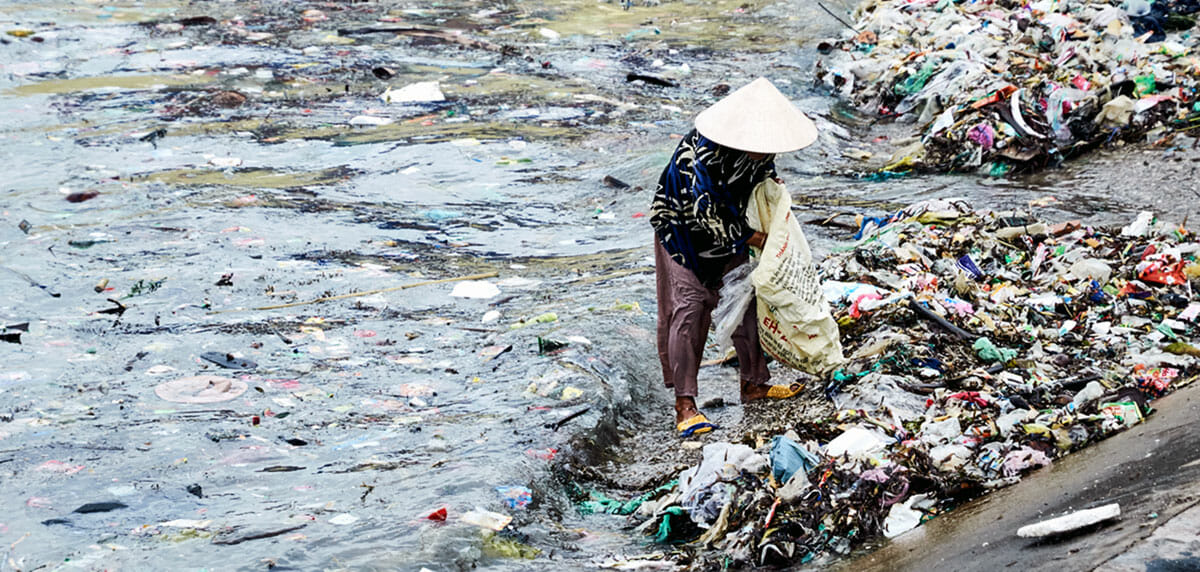
More than half of the plastic waste in the oceans comes from five Asian countries - even though they consume many times less plastic per capita than industrialized nations. This is due to inadequate waste systems.
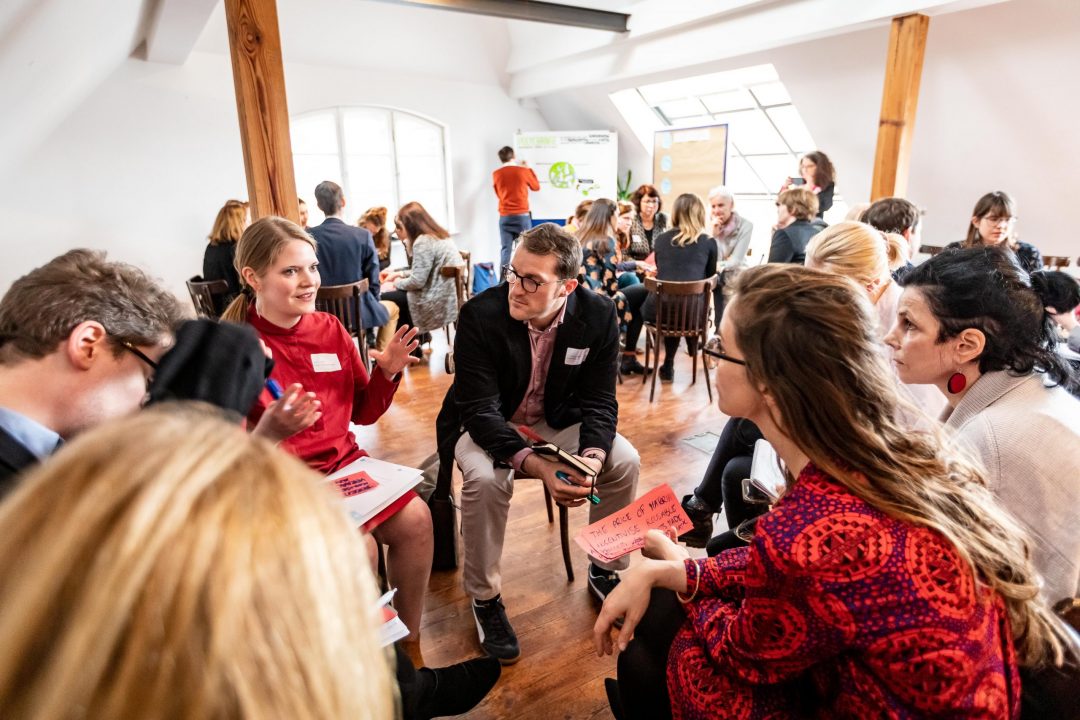
Joining forces. Developing solutions together instead of launching ever new individual projects into the world: How business, science and civil society can better cooperate in solving the problem of progressive environmental pollution caused by plastic waste was the topic of the 1st POLYPROBLEM Stakeholder Dialogue on March 27, 2019 in Berlin.

Despite the attention given to the increasing environmental pollution caused by plastic waste, a global agenda to solve the problem is not in sight. This is the critical finding of the first POLYPROBLEM report.