Actually, it sounds quite simple: Anyone who puts packaging into circulation is also responsible for what happens to it after it is used. This is what lies behind the term EXTENDED PRODUCER RESPONSIBILITY (EPR). In Germany and large parts of Europe, it has been largely implemented. However, it is precisely at the critical plastic hotspots in the Global South that Extended Producer Responsibility is still largely in its infancy. A major cause of the plastic waste problem.
Too often, experts from the Global North talk about plastic waste in the Global South. We wanted to know firsthand what the local NGOs are concerned about and therefore invited the founder of Environment360 from Ghana to the online seminar. The recording with Cordie Aziz is available online.
There is no blueprint for a functioning, circular waste management system. Solutions from industrialized countries cannot be exported one-to-one to emerging and developing countries. Instead, collaborations at eye level between municipalities, waste collectors and the local recycling industry must be carefully developed under the respective conditions. Dorothea Wiplinger, Sustainability Manager at Borealis AG and initiator of Project STOP, will report on what needs to be considered in the online seminar.
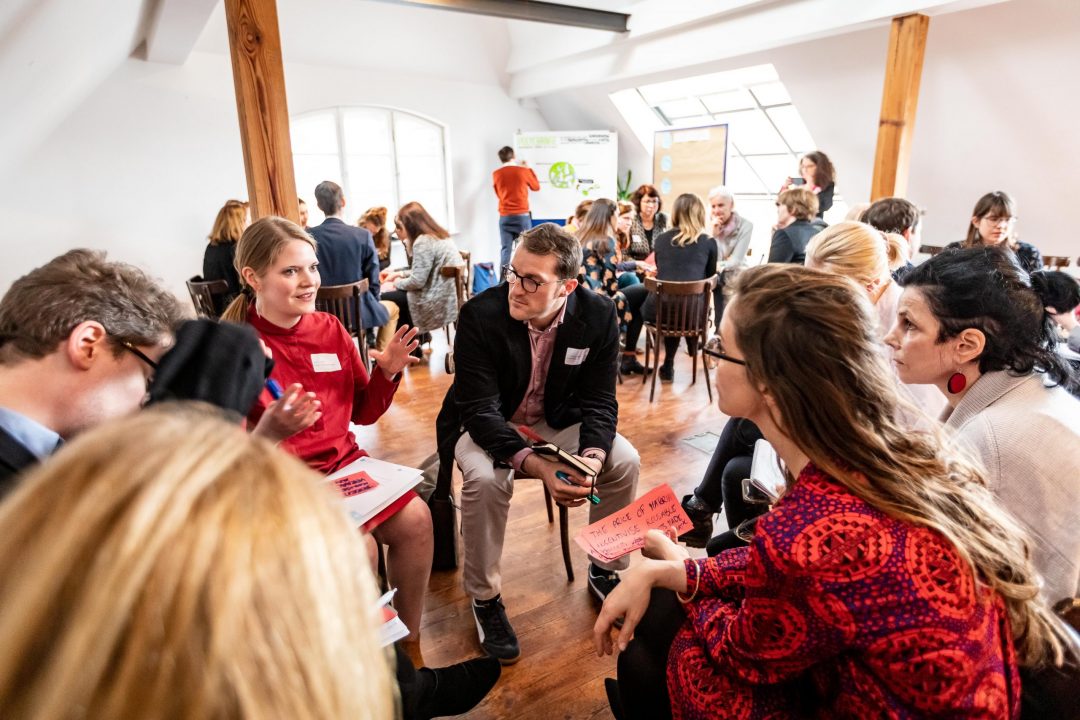
Joining forces. Developing solutions together instead of launching ever new individual projects into the world: How business, science and civil society can better cooperate in solving the problem of progressive environmental pollution caused by plastic waste was the topic of the 1st POLYPROBLEM Stakeholder Dialogue on March 27, 2019 in Berlin.