

Review: POLYPROBLEM Camp 2025
16 Sessions at POLYPROBLEM Barcamp create a spirit of optimism
How can a sustainable future with plastic succeed? This question was the focus of our first POLYPROBLEM Camp "New Narratives for the Plastic Transition" in Frankfurt, which brought together experts from civil society and business in Frankfurt. The aim was to develop new approaches to the responsible use of plastics – beyond simple blame games or moral appeals.
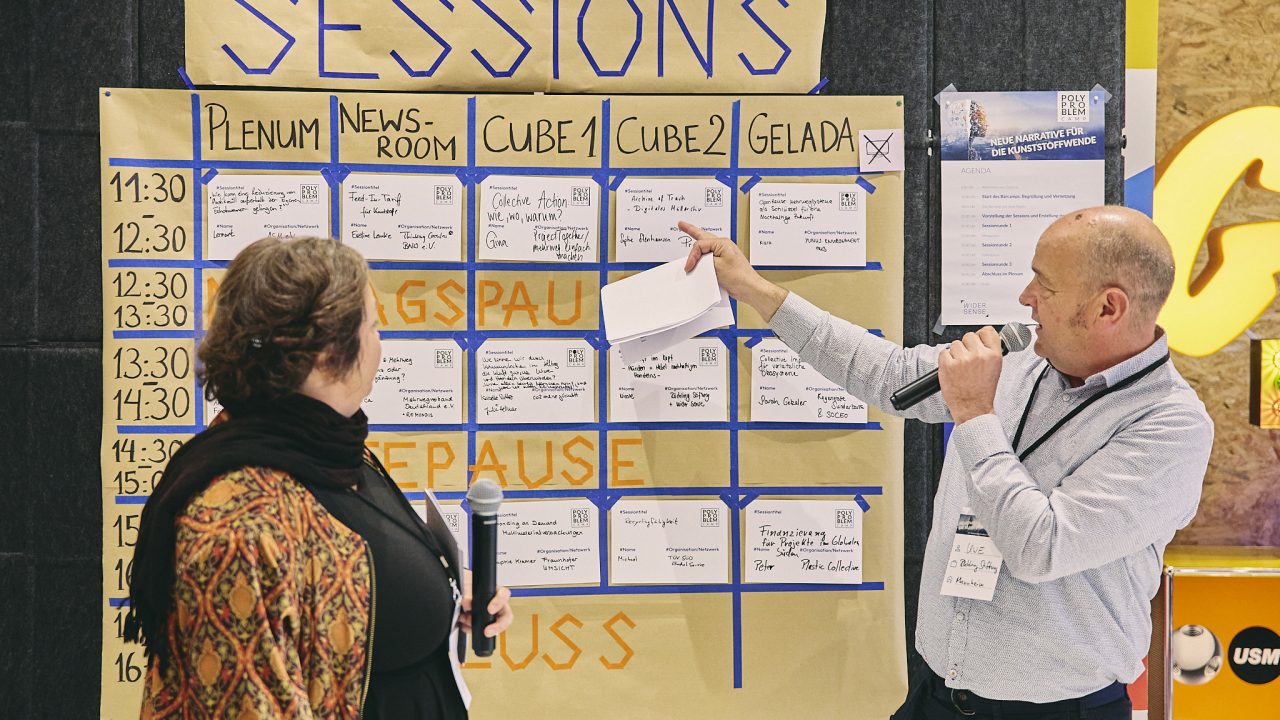
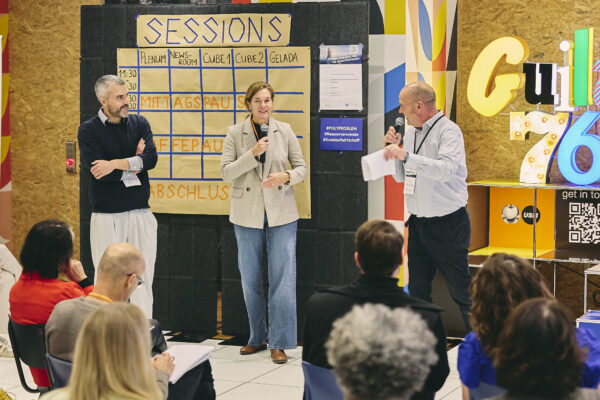
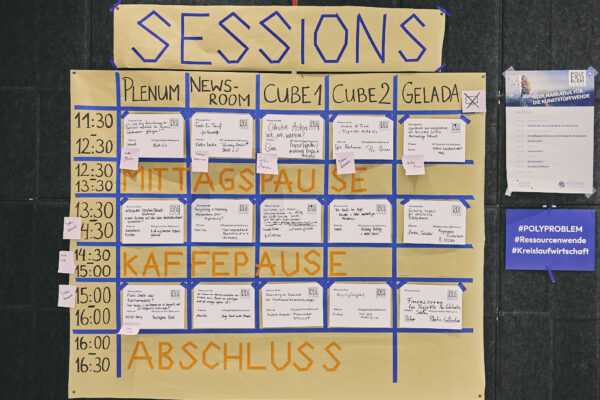
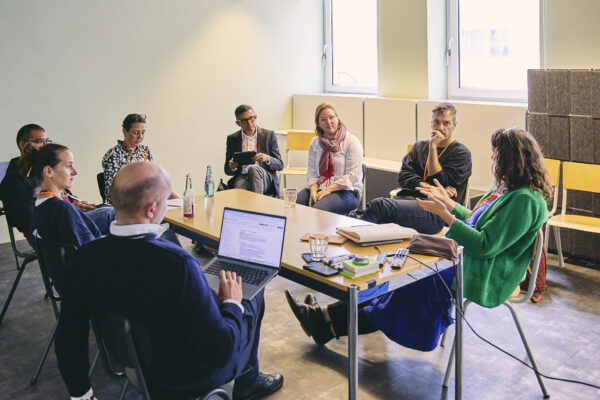
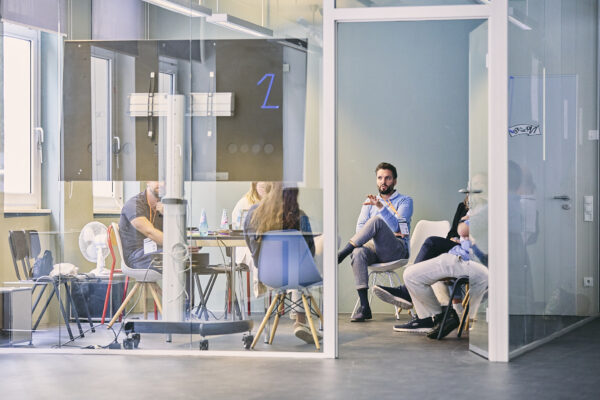
Instead of classic lectures, the meeting focused on the open format of a barcamp. Here, the participants themselves determine what is discussed. A total of 16 sessions in three rounds resulted in lively discussions about reusable systems, recycling methods, product designs, but also about social narratives that can hinder or inspire change. The topics ranged from circular economy and recycling quotas to social engagement and communication. It became clear that technical innovations alone are not enough – what is decisive is how people can be convinced and structures changed.
Local initiatives such as the Frankfurt "Taschen-Tausch" (bag exchange) showed how reuse can become suitable for everyday use. In the Main metropolis, there have been exchange stations for shopping bags since 2017. Now, a modular, 3D-printed open-source kit is being developed, which is to be distributed nationwide. Libraries, youth centers and schools could serve as partners in the future.
Global perspectives were also discussed. Projects such as "Buy Food with Plastic" in Ghana, Nicaragua and India exchange plastic bottles for meals – a simple but effective idea that combines education and recycling. In another example from Bangladesh and India, the Regenerate Sundarbans initiative is working to combine waste prevention, reforestation and poverty reduction in the mangrove forests.
But not only environmental issues, but also communication played a role. In several sessions, it became clear that blaming is rarely effective. Successful projects focus on positivity and shared learning. As Nicole Bendsen put it in her discussion round: "Sustainability should not begin with renunciation, but with enthusiasm."
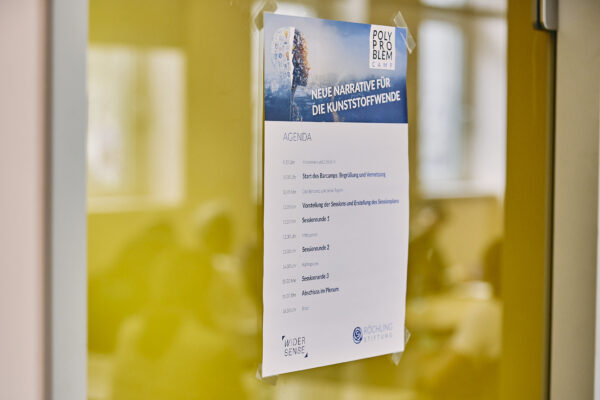
The POLYPROBLEM Camp, initiated by the Röchling Foundation and Wider Sense in cooperation with the Stiftung Bürgermut, thus offered far more than expert discussions. It showed that change does not arise from one big leap, but from many small, well-networked steps – from new alliances, clever ideas and a portion of courage to simply try things out.
At the end of the day, there was a spirit of optimism. The plastic transition, according to the realization, needs technology, politics and commitment – but above all stories that give hope and create a desire to participate.
Local initiatives such as the Frankfurt "Taschen-Tausch" (bag exchange) showed how reuse can become suitable for everyday use. In the Main metropolis, there have been exchange stations for shopping bags since 2017. Now, a modular, 3D-printed open-source kit is being developed, which is to be distributed nationwide. Libraries, youth centers and schools could serve as partners in the future.
Global perspectives were also discussed. Projects such as "Buy Food with Plastic" in Ghana, Nicaragua and India exchange plastic bottles for meals – a simple but effective idea that combines education and recycling. In another example from Bangladesh and India, the Regenerate Sundarbans initiative is working to combine waste prevention, reforestation and poverty reduction in the mangrove forests.
But not only environmental issues, but also communication played a role. In several sessions, it became clear that blaming is rarely effective. Successful projects focus on positivity and shared learning. As Nicole Bendsen put it in her discussion round: "Sustainability should not begin with renunciation, but with enthusiasm."
The POLYPROBLEM Camp, initiated by the Röchling Foundation and Wider Sense in cooperation with the Stiftung Bürgermut, thus offered far more than expert discussions. It showed that change does not arise from one big leap, but from many small, well-networked steps – from new alliances, clever ideas and a portion of courage to simply try things out.
At the end of the day, there was a spirit of optimism. The plastic transition, according to the realization, needs technology, politics and commitment – but above all stories that give hope and create a desire to participate.
Images © Christof Jakob